Source Jigsaw Puzzle Table Options for Display, Storage, and Play
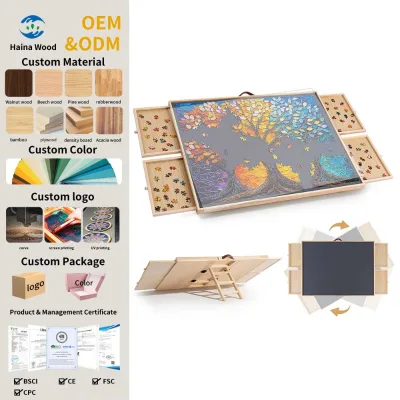
Explore 30 wooden jigsaw puzzle table listings from China. Compare models like HW-JPT-001 and EGS-20260401-01 for DIY toy storage, kitchen organization, and recreational display. Check MOQs, sample times, and customization options for bulk sourcing; compare the available evidence and request quotations based on your requirements.
Key considerations
Products List






Comprehensive Sourcing Guide
Jigsaw Puzzle Table Sourcing Guide
The global market for wooden puzzle tables presents a distinct opportunity for buyers seeking durable, educational furniture that combines play with storage. Current listings indicate a primary focus on DIY toy styles and intellectual toys designed for ages 14 and up, suggesting a shift toward adult enthusiasts or specialized educational settings rather than traditional toddler play. Sourcing strategies must account for the specific material requirements, as observed products consistently utilize wood with polished techniques to ensure a smooth surface for puzzle assembly.
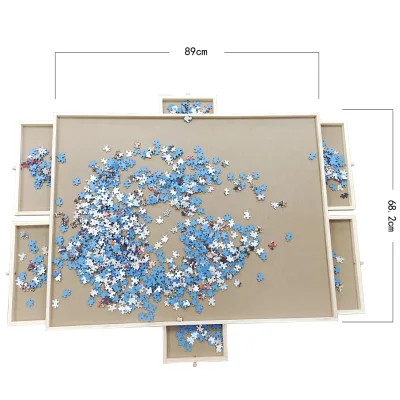
Buyers should prioritize suppliers who demonstrate flexibility in customization, as many listings explicitly accept OEM and ODM requests for logos and branding. The observed product range includes variations in size, from compact units to larger tables measuring 89 by 68.2 centimeters, which directly impacts shipping logistics and warehouse requirements. Understanding these dimensional variances is critical before initiating contact, as the single package sizes can vary significantly, ranging from 80x50x20 cm to 100x150x50 cm, affecting freight costs and storage planning.
Product Scope and Observed Listing Signals
Market analysis reveals a diverse range of product types under the jigsaw puzzle table category, including specific models like the HW-JPT-001 and EGS-20260401-01, which serve different functional needs. Some listings describe the item as a "Puzzle Table" with a DIY toy style, while others categorize it as a "Wooden Puzzle Table" or even a "Box & Case" with usage for kitchen shelf organization. This inconsistency in naming conventions requires buyers to carefully review the product description and usage keywords to ensure the item matches the intended application, whether for recreation, promotion, or storage.
The observed price range of 0.3 to 40.88 USD suggests a wide spectrum of quality and complexity, likely correlating with the number of pieces and the intricacy of the wooden construction. Buyers must verify if the low-end prices correspond to basic wooden frames or if they include the puzzle pieces themselves, as some listings specify piece counts between 1001 and 2000. Additionally, the availability of customized logos and the acceptance of OEM orders indicate that many suppliers are positioned to offer white-label solutions, which is a key signal for brands looking to enter the market with their own identity.
Technical Specifications to Verify
Dimensional accuracy is a primary technical concern, as the physical footprint of the table determines its suitability for various room layouts and storage capacities. Buyers must confirm the exact outer dimensions, noting that observed sizes range from 89x68.2 cm to one-size-fits-all configurations, and verify the single package dimensions to calculate shipping volume accurately. The gross weight of approximately 5.0 kg per unit is a critical factor for freight classification, and discrepancies in weight data between listings could indicate variations in material density or packaging density that affect shipping costs.
Material composition and finishing techniques require rigorous verification to ensure durability and safety for the intended age group. While most listings specify wood as the primary material with a polished technique, buyers should request detailed specifications regarding the type of wood, the finish used, and the structural integrity of the joints. The presence of specific model numbers like RFD343342/41/40 suggests that different configurations exist, and verifying the exact model against the requested specifications is essential to avoid receiving a product that does not meet the functional requirements of the puzzle assembly surface.
Compliance and Safety Documentation
Safety compliance is non-negotiable for products intended for recreational use, particularly when the target audience includes children or educational institutions. Some suppliers list certifications such as ASTM, CE, and EN, which are standard benchmarks for toy safety in international markets. Buyers must explicitly request current test reports for these specific standards to verify that the wooden components and any finishes used are free from harmful substances and meet the rigorous safety requirements of the destination country.
Beyond physical safety, documentation regarding packaging and handling standards is vital for maintaining product integrity during transit. The observed use of paper color boxes and safety packaging indicates a focus on protecting the polished wood surface, but buyers should verify the specific carton size standards, such as the 63.5x33.5x55 cm reference, to ensure the packaging is robust enough for long-distance shipping. Confirming that the supplier adheres to these packaging standards helps prevent damage claims and ensures that the product arrives in pristine condition, ready for retail display or direct use.
Cost Drivers and Commercial Terms
The commercial landscape for jigsaw puzzle tables is influenced heavily by minimum order quantities, which vary significantly across suppliers. Observed MOQs range from 100 sets to 1000 pieces, with some specific listings citing 300 pieces as a threshold. Buyers must align their order volume with these thresholds to secure the most favorable unit pricing, as ordering below the MOQ may result in higher per-unit costs or the inability to place an order at all. Understanding these volume constraints is essential for budgeting and inventory planning.
Payment terms and sample availability are other critical commercial factors that impact the procurement timeline and financial risk. Many suppliers offer sample services with lead times ranging from 7 to 15 days, allowing buyers to evaluate quality before committing to a bulk order. Payment methods like T/T are commonly observed, and buyers should negotiate clear terms regarding deposit percentages and balance payments upon shipment. Clarifying these terms early in the negotiation process helps establish a transparent relationship and prevents misunderstandings regarding financial obligations and delivery schedules.
Supplier Qualification and Quality Control
Geographic concentration of suppliers in regions like Guangdong, Shandong, and Shantou in China offers buyers access to established manufacturing hubs with specialized expertise in wooden toy production. However, the presence of multiple origins suggests that buyers must verify the specific factory location to ensure it aligns with their logistical preferences and quality expectations. Evaluating the supplier's location can provide insights into their supply chain capabilities, as proximity to raw material sources or export ports may influence lead times and overall cost efficiency.
Quality control protocols should be a central part of the supplier evaluation process, focusing on the consistency of the polished finish and the structural stability of the wooden table. Buyers should inquire about the supplier's internal quality assurance measures, such as random sampling procedures and defect rate thresholds, to ensure that every unit meets the specified standards. Given the handmade features noted in some listings, verifying the consistency of craftsmanship across different batches is crucial to maintaining brand reputation and customer satisfaction.
Long-Term Procurement Checks
Sustaining a successful supply chain relationship requires ongoing monitoring of lead times and production capacity to prevent disruptions in inventory flow. Observed sample times of 7 to 15 days provide a baseline, but buyers should establish clear expectations for bulk production lead times that account for potential delays in material sourcing or labor availability. Regular communication regarding production schedules ensures that the buyer can plan for restocking and marketing campaigns without unexpected gaps in product availability.
Continuous verification of product specifications and compliance status is necessary to adapt to changing market regulations and consumer expectations. As standards evolve, buyers must ensure that their suppliers remain up-to-date with the latest safety certifications and material requirements. Establishing a protocol for periodic audits or re-verification of product samples helps maintain high quality standards over the long term and ensures that the jigsaw puzzle tables continue to meet the evolving needs of the target market.
FAQs
What is the MOQ for jigsaw puzzle table orders?
The minimum order quantity is 100 sets for standard production runs. Some suppliers may require 300 pieces for specific models. Buyers should confirm the exact MOQ with the manufacturer before placing an order to ensure alignment with their procurement volume and budget constraints.
Can I customize the logo on the jigsaw puzzle table?
Yes, customized logos are acceptable for most jigsaw puzzle table orders. OEM and ODM services are available to meet specific branding needs. Buyers can provide their logo files to the supplier for application on the product or packaging, ensuring brand visibility in the final shipment.
What is the sample time for jigsaw puzzle table production?
The sample time typically ranges from 7 to 15 days depending on the supplier. Some manufacturers offer samples within 7 to 10 days, while others may take up to 15 days. Buyers should request a specific timeline from the supplier to plan their procurement schedule effectively.
What certifications are available for jigsaw puzzle table products?
Available certifications include ASTM, CE, and EN standards for safety and quality assurance. These certifications ensure the product meets international regulatory requirements. Buyers should verify the specific certification documents with the supplier to confirm compliance with their target market's safety regulations before finalizing the purchase.
What is the single gross weight of the jigsaw puzzle table?
The single gross weight is approximately 5.0 kg for standard models. This weight helps in calculating shipping costs and logistics planning. Buyers should confirm the exact weight with the supplier, as variations may occur based on the specific model number and packaging materials used in production.
Where are jigsaw puzzle tables typically manufactured?
Jigsaw puzzle tables are typically manufactured in Guangdong, China, and Shandong, China. Some sources may also list Shantou as a production origin. Buyers should specify their preferred location when sourcing to ensure alignment with logistics preferences and potential tariff considerations for their specific import region.